
/ Ilaria Cubalchini / to taste
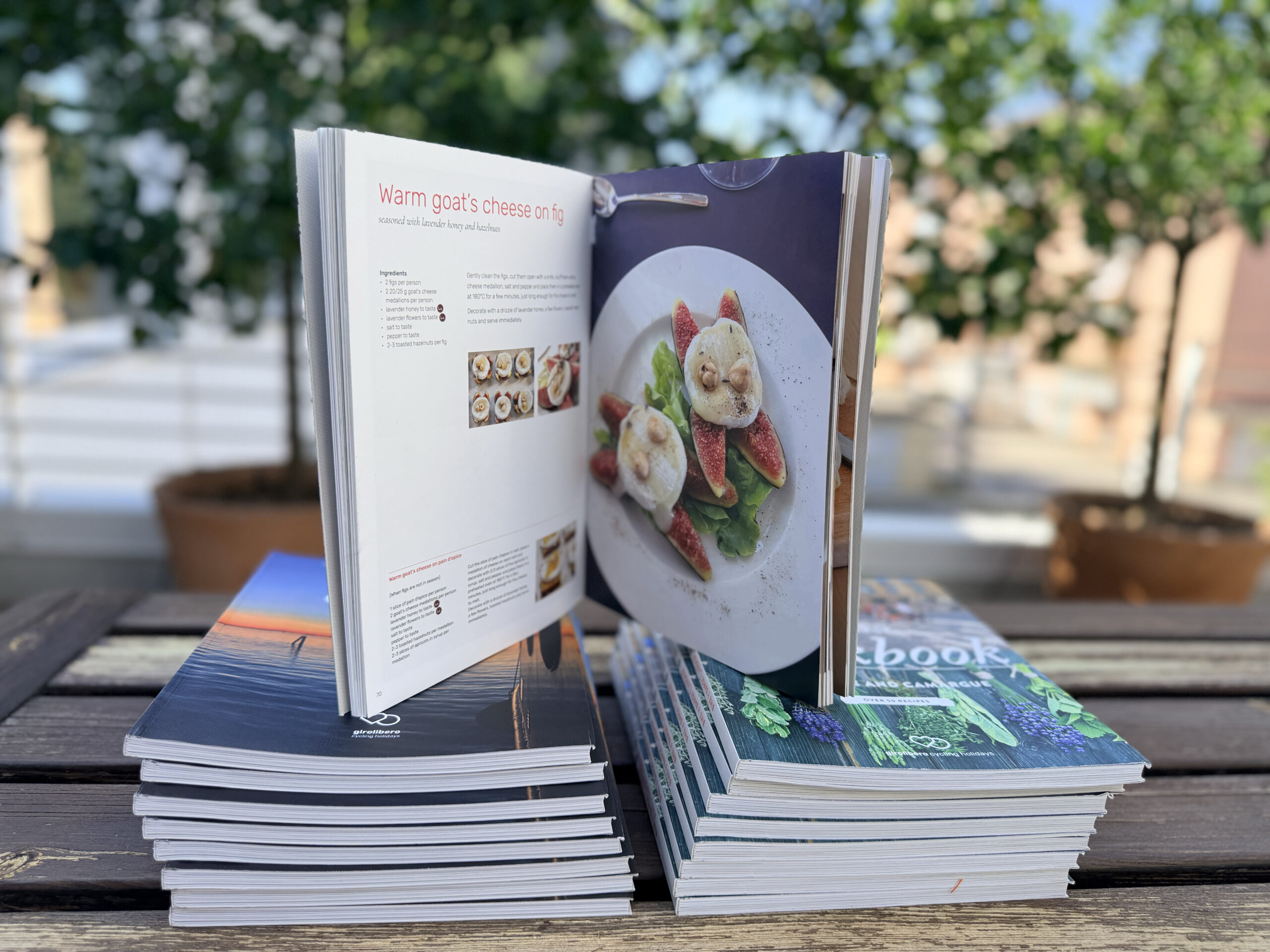
Bike and barge Cookbooks in Italy and France
Italy – browse the Cookbook (120 pages)
France – browse the Cookbook (120 pages)
Why two cookbooks?
Because all the travelers on our barges in Italy and France ask us to let them take home the recipes for the dishes they’ve tasted on board. Cuisine is a fundamental part of the travel experience, and our onboard chefs meticulously craft a weekly menu featuring local recipes and fresh, locally sourced ingredients. Here you can browse our publications and “get a taste” of the quality of our food.
Girolibero fresh ©
This is Girolibero’s culinary mini-manifesto that inspires the on-board cuisine and the recipes collected in our books:
Mediterranean cuisine
Our inspiration are the old recipes books compiled by mothers and grandmothers who shopped locally and harvested produce from the vegetable patch and their own gardens. We also allow ourselves to ‘borrow’ a few influences from countries near and far.
Flavour first
The flavour comes from fresh, local ingredients: not from excessive salt, sugar, glutamate, flavour enhancers or heavy use of butter or industrial margarines. What about fried foods? Frying confuses flavours and textures and results in waste-oil that is difficult to dispose of: no thanks!
Selected suppliers
We choose our suppliers carefully and get to know each of them, favouring the quality and local origins of the products, so we can rely on their freshness and avoid frozen foods at all costs. We also seek out suppliers guided by ethical choices: one particular example is the coffee that arrives straight from the roasting plant of the women’s prison in Naples.
30 different types of vegetables, fruits and legumes
It seems incredible, but this is the depth of variety you will eat in a week on board. A true panacea for body and mind which this recipe book will help you replicate at home!
The tours from Mantua to Venice and from Avignon to Aigues-Mortes are a Girolibero classic. Year after year we have adjusted our ‘recipe’ for a truly memorable holiday: the specialities being the on-board cuisine and hospitality offered by our chefs and the entire staff onboard.
The Girolibero story and many other holidays organised with the same care can be found
at www.girolibero.com2 Bike and barge weeks

